Fishing License by Terrain: Sand, Rock, Estuary and Cliff in Portugal
Stand at the edge of mainland Portugal and the ground under your feet changes faster than the weather. One morning you are sinking into the damp sand of a long Atlantic beach, the next you are balanced on a basalt ledge while spray climbs the rock face beside you. An hour inland, the same coastline softens into an estuary where the tide creeps across mudflats and the water tastes half fresh, half salt. Each of these landscapes asks something different from your tackle, your timing and your casting style. Yet they all ask the same administrative question first: are you covered to fish here? Sorting out a fishing license before you choose your spot means the terrain, not the paperwork, becomes the only thing on your mind.
This article walks through the main terrain types a recreational sea angler meets along the Portuguese mainland coast, from open sand to rocky outcrops, estuaries and high cliffs. For each one, we look at what the environment does to your fishing and what the licence side of the equation practically involves. The goal is simple: match your permit to the ground you actually plan to stand on.
Sandy Beaches and Dune-Backed Shores
Portugal’s sandy coast is the terrain most visiting anglers picture first. Long, gently sloping beaches run for kilometres, backed by dunes and often exposed to a steady onshore breeze. The bottom is usually clean sand, sometimes with shell grit or scattered pebbles, and the surf zone shifts with every tide. This is classic surfcasting ground: you wade to knee or waist depth, cast beyond the breakers and wait for the water to reveal a gutter or a hole where fish are feeding.
Because the terrain is open and the horizon is wide, sandy beaches feel forgiving. They are also the places where beginners most often fish without thinking about rules, simply because access is easy and nobody is watching. That is exactly why the licence question matters here. Recreational sea fishing along the mainland coast is regulated, and the permit applies whether you are standing on a crowded summer beach or a deserted stretch in February. The landscape does not change the legal requirement.
Practically, sandy terrain rewards mobility. You walk a lot, you read the surf, and you may move several hundred metres between casts. A licence that you can arrange quickly and keep on your phone fits that rhythm far better than one that requires a detour to an office. For anglers planning a trip around portugal fishing, handling the application online in a few minutes means more daylight spent reading the beach instead of chasing paperwork.
Watch for the features that break up an otherwise uniform shore: a gully running parallel to the beach, a patch of darker water marking a deeper hole, or a sandbar that forces waves to crest early. These are the spots where bass, bream and flatfish concentrate. The terrain tells you where to cast; the licence simply lets you do it legally.
Rocky Outcrops and Basalt Ledges
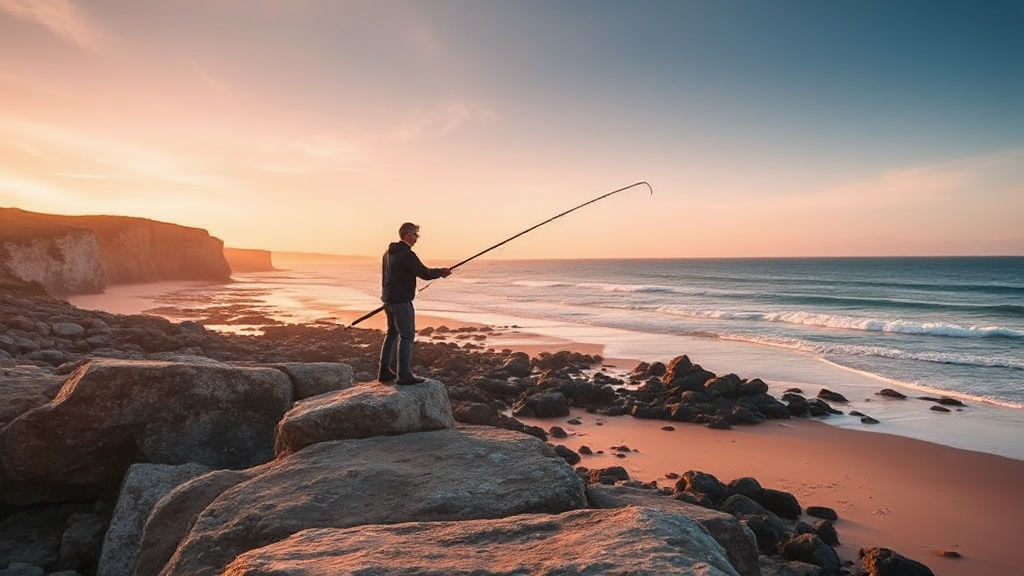
Move away from the sand and the character of the coast changes completely. Rocky outcrops, boulder fields and volcanic ledges create vertical structure, sudden drop-offs and pockets of deep water right beside the shore. In places like the Sintra coast or parts of the Algarve, the rock is fractured and uneven, and the sea below is dark and restless. This is ambush terrain, where fish hold close to cover and strike quickly.
Fishing from rock demands more from you physically. Footing is uncertain, spray makes surfaces slippery, and a rising swell can turn a comfortable ledge into a dangerous one within minutes. The terrain also changes how you present a bait or lure: you may need to fish straight down, swing a lure along a wall, or drop a bait into a narrow channel between rocks. Distance casting matters less than accuracy and control.
The licence implication here is less about the fishing method and more about where you are. Rocky shorelines often sit within areas that are clearly coastal and clearly covered by recreational sea fishing rules for the mainland. If you are hopping between sand and rock on the same trip, you do not need a different permit for each surface. One valid recreational sea fishing licence covers your activity along the coast, whether your boots are on sand or stone.
What rocky terrain does demand is preparation. Check the tide and swell before you commit to a ledge, wear footwear with grip, and never fish alone in exposed positions. Sort your permit in advance so that a last-minute change of plan, from beach to rocks, does not leave you scrambling for coverage.
Estuaries, Rias and Tidal Channels
Estuaries are the hybrid terrain of the Portuguese coast, where rivers meet the sea and the water shifts between fresh and salt with the tide. The ground is often soft mud, sand or a mix of both, and the shoreline may be fringed with marsh grass, reed beds or low stone walls. Currents are complex, depth changes quickly, and the whole environment feels more enclosed than the open coast.
This terrain is a nursery and a feeding ground. Juvenile fish shelter here, and larger predators follow them in. Because the water is often calmer than the open Atlantic, estuaries suit anglers who prefer wading, bank fishing or fishing from a small boat. The challenge is reading the flow: a channel that is dry at low tide may be a highway for fish two hours later.
Estuaries raise a fair question about what kind of licence applies. In Portugal, recreational sea fishing rules cover coastal and estuarine waters, and the same permit that lets you fish the open shore generally covers your activity in the tidal reaches where salt water still dominates. The practical point is that you should not assume an estuary is a legal grey zone simply because it looks like a river. If the water is tidal and connected to the sea, treat it as coastal terrain and make sure your fishing in portugal paperwork is in order before you wade in.
Soft ground also affects safety and access. Mud can be deeper than it looks, and a falling tide can strand you on a bank cut off from the shore. Plan your exit as carefully as your entry, and check local signage for any specific restrictions around reserves or protected areas.
Cliffs, Headlands and Exposed Points
Cliffs and headlands are the most dramatic terrain on the Portuguese coast, and often the most productive. A rocky point that juts into deep water concentrates current, baitfish and predators. You may be fishing from a high ledge, lowering a bait down a wall, or casting from a lower platform where the swell surges against the rock. The view is spectacular, and the fishing can be excellent.
It is also the terrain that punishes carelessness hardest. Wind funnels around headlands, waves refract and amplify against cliff faces, and a spot that feels safe at low tide can be washed over without warning. Many experienced anglers treat cliff fishing as a fair-weather activity, choosing calm days and watching the swell forecast closely.
From a licensing perspective, cliffs are simply another form of coastal terrain. The requirement to hold a valid recreational sea fishing licence for mainland Portugal does not change because the ground is vertical rather than horizontal. What changes is your risk profile, and that is a reason to be more organised, not less. Arrange your permit before the trip, keep a copy accessible on your phone, and treat the licence as one small part of a broader safety plan that includes telling someone where you are going and when you expect to return.
Headlands also tend to attract other anglers, which can be helpful. Local knowledge about which ledges fish well at which tide is invaluable, and the shared etiquette of giving each other space is part of the experience. Just remember that popular spots are popular for a reason, and the rules apply to everyone standing on the rock.
Harbours, Breakwaters and Man-Made Structure
Not all fishing terrain is natural. Harbours, breakwaters, jetties and sea walls create artificial structure that fish use in much the same way as rock. Boulders armouring a breakwater offer cover and current breaks; harbour walls provide depth and shade; and the constant human activity often means food scraps and disturbed baitfish. These are accessible, comfortable places to fish, which makes them popular with families and casual anglers.
Because they are easy to reach, harbour and breakwater spots are also where licence compliance is most likely to be checked. They sit at the boundary between recreational fishing and commercial activity, and local rules may restrict certain methods or areas within port limits. The terrain itself is straightforward, but the surrounding regulation can be more specific than on an open beach.
The sensible approach is to treat any man-made coastal structure as coastal terrain for licensing purposes, then check for local signage about where exactly you may and may not fish. A valid recreational sea fishing licence covers your activity, but it does not override port authority rules or protected zones. When in doubt, ask at the harbour office or look for posted notices.
These spots are also a good reminder that licensing is not just about avoiding a fine. It is about participating in a managed fishery that depends on anglers following the same basic rules. Buying a permit is a small signal that you take the resource seriously, whether you are casting from a granite breakwater or a wild cliff ledge.
Matching Your Permit to the Ground You Fish
Across all of these terrains, one principle holds: the licence requirement follows the water and the activity, not the texture of the ground beneath your boots. Sand, rock, mud, cliff and concrete are all part of the same coastal fishery, and a single recreational sea fishing licence for mainland Portugal is designed to cover your activity across them. That is convenient for anglers who like to move between environments on the same trip, and it removes the temptation to guess whether a particular spot counts as sea or river.
What changes from terrain to terrain is everything else: your tackle, your safety planning, your reading of tide and swell, and the species you are likely to encounter. Sand asks for distance and mobility. Rock asks for grip and accuracy. Estuaries ask for patience and flow-reading. Cliffs ask for humility and weather awareness. Harbours ask for attention to local rules. The licence is the constant that lets you focus on those variables.
If you are planning a trip that mixes beach sessions with rocky marks and estuary evenings, sorting the permit early is the simplest way to protect your time. An online application takes only a few minutes, needs no government portal login, and can be paid by card, Apple Pay or Google Pay, which means you can arrange it from a café, a campsite or the passenger seat of a car on the way to the coast. That leaves you free to spend your energy on the part that actually matters: choosing the right ground for the conditions and fishing it well.
Portugal rewards anglers who read the landscape. The country packs an extraordinary range of coastal terrain into a relatively short stretch of Atlantic shoreline, and each type offers a different kind of session. Get the licence question settled, then let the ground under your feet decide the rest. From the soft sand of a dune-backed beach to the hard edge of a basalt ledge, the coast is waiting, and the rules are simpler than the terrain suggests.